Healthy Aging
The Body Is Always Listening: Building Strength, Balance, and Resilience as We Age
Strength and balance support the everyday movements that help us live with confidence. A realistic starting point, appropriate guidance, nourishing meals, and time to recover can help make movement a sustainable part of growing older.
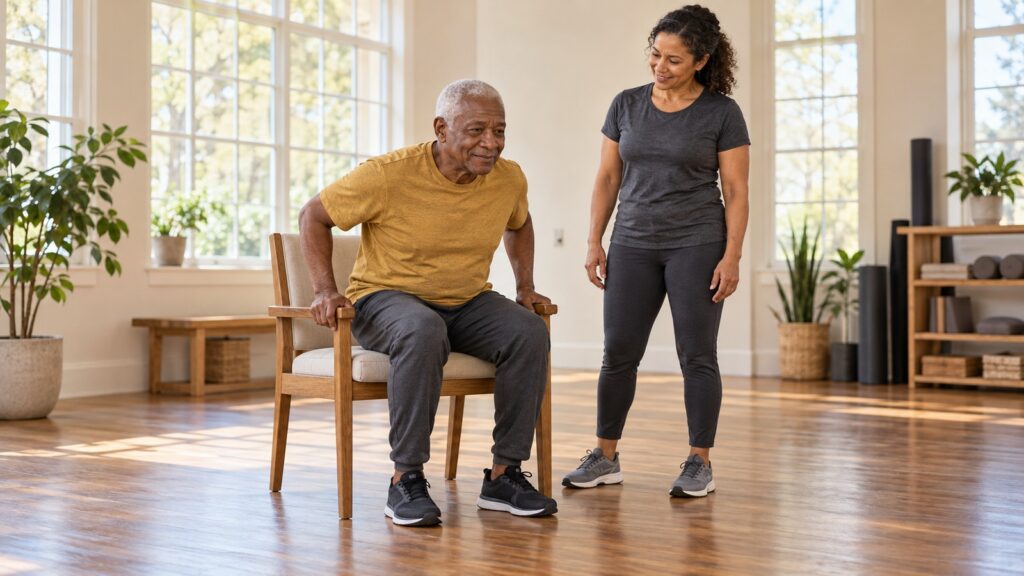
In our first article, we explored the importance of changing how we think about aging, recognizing that growing older does not mean surrendering our vitality or independence. Instead, it offers an opportunity to become more thoughtful participants in our own well-being. But appreciation for our bodies, while deeply important, is only the beginning. The next step is learning how to support them through the choices we make each day, particularly when it comes to movement, strength, balance, nourishment, and recovery.
One of the more remarkable characteristics of the human body is its ability to adapt to the demands placed upon it. Our muscles, bones, cardiovascular system, and nervous system constantly respond to how we live. When we move regularly and challenge ourselves appropriately, we give our bodies reasons to maintain and, in many cases, improve their capabilities. Conversely, when we become increasingly sedentary, our bodies gradually adapt to doing less. This is not a personal failure. It is simply biology, and understanding it gives us an opportunity to make meaningful changes.
Our muscles and bones
Consider our muscles and bones, two essential components of healthy aging that are often overlooked until a problem develops. As we grow older, we become increasingly vulnerable to reductions in muscle mass and strength, a process commonly associated with sarcopenia. At the same time, bone density may decline, increasing the risk of osteopenia, osteoporosis, and fractures. These changes can affect far more than our appearance or performance in the gym. They can influence our ability to climb stairs, carry groceries, rise from a chair, maintain balance, and continue enjoying the activities that make life meaningful.
Fortunately, our bodies remain responsive to appropriate physical challenges. Resistance training helps preserve and build muscle strength, while weight-bearing activities and appropriately designed resistance exercises can help support skeletal health. Our bones respond to mechanical loading through a biological principle known as Wolff’s law, which describes how bone adapts to the forces placed upon it. Exercise can help support bone health, maintain physical function, and reduce fall-related risks. For individuals with significant bone loss or a history of fractures, activities should be selected with appropriate professional guidance.
Balance deserves equal attention
Balance deserves equal attention. It is easy to take our ability to remain upright for granted until an unexpected stumble reminds us how important it truly is. Balance involves communication among our eyes, inner ears, muscles, joints, and brain. The encouraging news is that balance can often improve with practice. Thoughtful exercises that challenge stability, coordination, and body awareness can help us move through the world with greater confidence. Yoga, tai chi, and structured balance training can be particularly valuable because they encourage us to develop not only physical control but also greater awareness of how our bodies move through space.
Nourishment and recovery
Yet movement represents only one part of the equation. Our bodies also require nourishment and recovery. Adequate protein helps support the maintenance and repair of muscle tissue, while sufficient calcium, vitamin D, and overall nutritional quality contribute to bone and metabolic health. Restorative sleep supports many processes involved in physical recovery, cognitive function, and emotional regulation. Rather than viewing exercise, nutrition, and sleep as separate responsibilities, we can begin to recognize them as interconnected expressions of caring for ourselves.
Habits that feel achievable and sustainable
We should also remember that beginning does not require extraordinary effort. For someone who has been inactive, a short walk, a few carefully performed strengthening exercises, or several minutes of balance practice may represent a meaningful first step. As confidence and ability improve, those activities can gradually become more challenging. The objective is not to overwhelm ourselves with unrealistic expectations, but to establish habits that feel achievable and sustainable. Consistency, supported by patience, often accomplishes far more than occasional bursts of enthusiasm followed by exhaustion or discouragement.
Perhaps most importantly, we must release the belief that doing more is always better. There is wisdom in learning when to challenge ourselves and when to rest. A compassionate approach to healthy aging recognizes that our needs change, sometimes from one day to the next. The goal is not to push through every limitation or pursue physical perfection. It is to create a sustainable relationship with movement and self-care that allows us to remain capable, confident, and engaged in life for as long as possible.
Strength is not simply measured by how much weight we can lift. It is reflected in how freely, confidently, and independently we can live. Every thoughtful effort we make today is an investment in the person we hope to be tomorrow.
In our third article, we will explore another equally important dimension of healthy aging, one that cannot be measured solely by muscle mass, bone density, or laboratory results: the profound influence of our thoughts, relationships, emotional well-being, and sense of purpose.